
Body temperature (36.5°C–37.5°C) varies by age, activity, environment, and health. Thermoregulatory systems maintain these fluctuations. Digital and mercury-free thermometers offer accurate readings. Factors like sensitivity, response time, and stability determine thermometer quality. Optimal home measurements: 20°C–25°C, 40%–60% humidity. Normal resting temperature (97°F–99.5°F) deviations indicate potential health issues. Tracking throughout the day offers valuable insights for overall health assessment.
Accurately measuring body temperature at home is a vital skill for both personal health monitoring and preventing the spread of illness. However, with numerous devices available, navigating options and ensuring reliable readings can be challenging. This article provides an authoritative guide to help you demystify the process, offering practical insights on choosing the right thermometer—from digital to mercury-free glass—and understanding environmental factors that naturally influence temperature readings. By the end, you’ll be equipped with the knowledge to make informed decisions and obtain precise body temperature measurements in the comfort of your home.
- Understand Body Temperature: Normal Ranges and Variables
- Choose the Right Thermometer for Accurate Readings
- Prepare and Position Yourself for Optimal Measurement
- Interpret Results and Track Changes in Body Temperature Naturally
Understand Body Temperature: Normal Ranges and Variables

Understanding body temperature is a crucial aspect of maintaining optimal health. The human body’s internal temperature typically ranges between 36.5°C to 37.5°C (97.7°F to 99.5°F), with slight variations during the day and across different individuals. This normal range is influenced by various factors, such as age, activity level, environment, and overall health. For instance, athletes or individuals in hot environments may experience slightly elevated temperatures due to increased metabolic activity, while those resting or in colder climates might have lower readings.
Temperature naturally fluctuates throughout the day, with a general decrease at night during sleep. These variations are regulated by the body’s thermoregulatory system, which includes hormones and nerve signals that interact with specific receptors within the skin, muscles, and brain. The most common method to measure these temperature ranges is through the use of science lab equipment like thermometers, with types available for clinical, industrial, and environmental studies—including our own brand offering a range of accurate thermometer types.
Absolute zero point temperature, the lowest possible temperature in the universe (-273.15°C or -459.67°F), is theoretically irrelevant to body temperature measurements. However, understanding global warming impacts relative humidity, which can affect perceived and actual temperatures. For example, high relative humidity can make a given temperature feel cooler due to reduced heat transfer, while low humidity may intensify the sensation of warmth. Knowing these variables enhances the accuracy and interpretation of at-home temperature readings, enabling individuals to better monitor their health and well-being.
Choose the Right Thermometer for Accurate Readings

Choosing the right thermometer is a crucial step in accurately measuring your body temperature at home, especially when monitoring for fever symptoms. The most common types are digital and mercury-free glass thermometers. Digital thermometers use electronic sensors to measure heat, while glass thermometers rely on the heat capacity difference between liquid substances—a principle that has been refined over centuries of development.
Among digital options, those designed with advanced technology, such as those incorporating emissivity properties, offer precise readings. Emissivity refers to an object’s ability to emit infrared energy, a factor critical in non-contact thermometers that measure temperature from a distance. These modern instruments can quickly and accurately gauge temperature without direct contact, minimizing discomfort and ensuring convenience. For example, some models use infrared sensors to capture heat from the forehead, providing a reliable reading within seconds.
When selecting a thermometer, consider its sensitivity, response time, and stability. A device with a lower detection limit ensures precise readings even at slightly elevated temperatures. Additionally, look for thermometers calibrated to provide consistent results. If you’re unsure, give us a call at Engineering Design Astral Heating—our experts can guide you in choosing the ideal thermometer tailored to your needs, ensuring accurate temperature measurements and peace of mind.
Prepare and Position Yourself for Optimal Measurement

Accurately measuring body temperature at home requires a thoughtful approach, beginning with preparing yourself and your environment for optimal results. Temperature measurement is a delicate process, influenced by various factors such as environmental conditions, clothing, and even your own bodily functions. To ensure precise readings, consider these key aspects before using any thermometer, whether digital or mercury-free glass.
First, establish a comfortable and controlled setting. Aim for a temperature in the range of 20°C to 25°C (68°F to 77°F), as extreme temperatures can affect reading accuracy. In an ideal scenario, a well-ventilated room with moderate lighting and relative humidity between 40% and 60% is preferred. These conditions emulate the natural environment of the human body, allowing for more reliable temperature readings. Remember, even minor fluctuations in temperature due to external factors can skew results, so creating this optimal environment is crucial.
The concept of blackbody radiation, a fundamental principle in engineering applications, plays a role here. Our bodies emit infrared energy, much like a blackbody radiator, which varies with temperature. By maintaining a balanced environment, you minimize the impact of this natural thermal expansion and contraction on the measured temperature. Additionally, biochemistry principles tell us that bodily functions can influence heat distribution, so controlling external factors ensures an accurate reflection of internal body temperature. For instance, excessive clothing or sudden changes in room temperature could lead to readings that differ from your actual physiological state.
As you prepare, consider visiting us at heat energy transfer for in-depth insights and tools. We offer resources to help you understand the intricate relationship between temperature, humidity, and human comfort, enabling you to make informed adjustments. With these factors considered, you’ll be better equipped to rely on your at-home thermometer for consistent and accurate measurements.
Interpret Results and Track Changes in Body Temperature Naturally
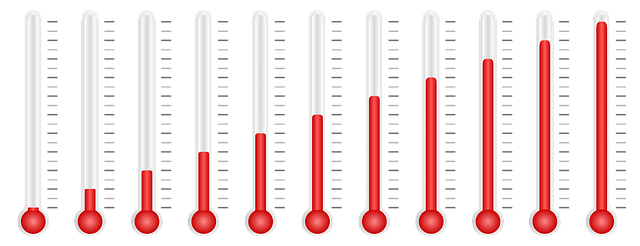
Interpreting your results is a crucial step in accurately measuring body temperature at home. A normal resting human body temperature typically ranges between 97°F (36°C) and 99.5°F (37.5°C). Temperatures below or significantly above this range may indicate an underlying condition. For instance, a persistent low body temperature could signal hypothermia, while a high reading might suggest fever from an infection. Regularly tracking your temperature throughout the day can help you identify patterns and any sudden changes.
Keep in mind that various factors, including external environment, physical activity, and even ocean currents, can impact body temperature naturally. For example, exposure to cold or heat can cause fluctuations. This is why it’s essential to consider the context in which you’re taking measurements and maintain consistency in your tracking method. Over time, you’ll develop a better understanding of what constitutes a healthy temperature range for you personally.
Additionally, comparing your readings with normative data from reputable sources can provide valuable insights. Many health organizations publish guidelines based on large-scale studies, offering reference ranges for different demographics and age groups. By benchmarking your results against these standards, you gain a more comprehensive view of your overall health. If you notice persistent or drastic changes in temperature naturally, it’s wise to consult with a healthcare professional for further evaluation, especially if accompanied by other symptoms.
To enhance accuracy, explore the science behind heat energy transfer and its impact on measurements. For instance, digital thermometers use advanced algorithms that account for environmental factors when providing readings. Moreover, understanding the principles behind different measurement techniques—be it oral, axillary, or rectal—allows you to select the most appropriate method for various scenarios. Visit us at asteroid surface readings anytime to explore these concepts in greater depth and ensure you’re harnessing the full potential of at-home temperature monitoring.
By understanding normal body temperature ranges and how they can vary, selecting the appropriate thermometer for accurate readings at home, preparing yourself for optimal measurement, and interpreting results naturally, you gain valuable insights into tracking your body temperature changes over time. This comprehensive approach allows for proactive health monitoring and promotes a deeper connection to your body’s natural rhythms. Accurately measuring temperature at home is now not only feasible but also empowering, enabling you to make informed decisions about your well-being.
