
Converting dates between the Gregorian and Hijri calendars requires a deep understanding of their structures. The Hijri Calendar, based on lunar cycles, has variable month lengths and a shorter year by 10-11 days. Accurate conversions involve aligning key dates, using reliable tools accounting for leap years, and maintaining historical context. Global adoption highlights the Hijri Calendar's cultural significance in architecture. Key strategies include structured conversion tables, educational events, digital tools, and regular practice to master date conversions between these calendars.
Converting dates between calendars is a ubiquitous challenge, especially with the widespread use of the Gregorian Calendar alongside historical and cultural systems like the Hijri Calendar. Accurate date conversions are essential for global communication, historical research, and religious observance. However, the nuances of different calendar systems—their varying lengths, leap years, and month cycles—can lead to confusion and errors. This article provides an authoritative guide to mastering date conversions, focusing specifically on improving accuracy between the Gregorian and Hijri calendars, empowering you with the knowledge to navigate these complexities effortlessly.
- Understanding Date Conversions: A Comprehensive Guide
- Mastering Time Zones: Hijri Calendar Integration
- Practical Tips: Enhancing Accuracy in Date Conversion
Understanding Date Conversions: A Comprehensive Guide

Converting dates between calendars, particularly between the Gregorian and Hijri systems, requires a deep understanding of both timekeeping mechanisms. The Hijri Calendar, based on lunar cycles, has 12 months with varying lengths, unlike the fixed 365-day year of the Gregorian calendar. This natural difference makes accurate conversions a nuanced task, especially when considering Islamic months and their significance in religious observances like Ramadan.
To improve conversion accuracy, it’s vital to grasp the cyclical nature of the Hijri year. A year in this calendar is approximately 10 or 11 days shorter than a Gregorian year due to its reliance on lunar phases. For instance, the month of Ramadan in the Hijri calendar shifts roughly 11 days earlier each year in the Gregorian equivalent. This variation highlights the need for meticulous tracking and calculation when dealing with dates related to Islamic festivals and events.
Practical advice includes maintaining a consistent reference point by aligning key dates in both calendars. For example, one could set the first day of Ramadan each year based on the Hijri calendar and then convert that date to Gregorian for sharing with non-Muslim communities. Utilizing reliable conversion tools and resources specifically designed for Hijri-Gregorian conversions can also aid precision. These tools often account for leap years and other complexities, ensuring a more accurate representation of dates, especially over longer periods. By combining practical methods with a deep understanding of both calendars, modern Muslim communities can ensure the relevance and accuracy of date conversions in their daily lives and religious observances, such as accurately determining Ramadan timing using the Hijri calendar.
Mastering Time Zones: Hijri Calendar Integration
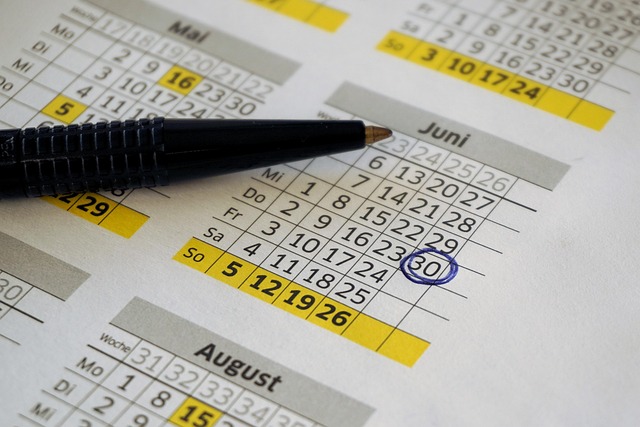
Converting dates between calendars accurately, especially when integrating the Hijri Calendar, requires a deep understanding of time zones and historical context. The global adoption of Hijri systems, rooted in Islamic tradition, underscores its significance beyond religious observance. In regions where the Hijri calendar’s impact on architecture is evident, navigating these systems becomes vital for cultural continuity and shared heritage.
Mastering time zones involves recognizing that the Hijri Calendar, with its lunar-solar cycle, diverges from the Gregorian in both date and time. For instance, while a specific day in the Gregorian calendar may be morning in one timezone, it could be early afternoon in another, depending on their relative positions to the sun. This temporal disparity necessitates precise calculations when converting between calendars, especially for events that span multiple zones or are tied to astronomical phenomena like Islamic festivals.
Practical insights into Hijri Calendar integration include leveraging reliable conversion tools that account for timezone differences and historical adjustments. For example, many digital platforms now offer sophisticated algorithms that factor in lunar cycles and historical calendar shifts, ensuring accuracy across vast regions with diverse timekeeping practices. Additionally, understanding the why behind the Hijri system—its role in religious observances like finding us at Islamic festivals tied to its dates—is key to appreciating the need for meticulous conversion methods.
Expert advice for improving accuracy includes keeping abreast of global time zone changes and maintaining a flexible mindset when converting. The Hijri calendar’s influence on architecture worldwide serves as a testament to its enduring relevance, reminding us that precise date conversions are not merely technical but cultural and historical endeavors.
Practical Tips: Enhancing Accuracy in Date Conversion

Date conversion accuracy between calendars, particularly when transitioning between the Hijri and Gregorian systems, can be significantly enhanced through a combination of practical strategies and engaging activities. Understanding the unique aspects of each calendar, such as the Hijri year’s lunar-solar cycle, is foundational. For instance, while the Gregorian year remains constant at 365 or 366 days (leap years), the Hijri year varies between 354 and 355 days, based on moon phases. This difference underscores the need for precise calculations when converting dates.
Practical tips include adopting a structured approach: use comprehensive conversion tables tailored to each calendar system. These tools, often incorporating advanced algorithms, account for leap years and other variations. Additionally, engaging in activities that foster Hijri awareness can significantly improve accuracy. For example, participating in cultural events or workshops that highlight the significance of specific dates within the Hijri calendar year can deepen your understanding of its rhythm and nuances.
Modern design inspiration from calendric systems, including both Gregorian and Hijri, offers innovative ways to visualize time. Interactive digital tools and apps can make date conversion more engaging while ensuring accuracy. Incorporating these resources into your learning routine, combined with regular practice, can lead to remarkable improvements in your ability to accurately convert dates between calendars. For a deeper dive, visit us at fun ways to learn Hijri dates anytime, where you’ll discover more practical tips and interactive activities designed to enhance your understanding of hijri awareness.
By delving into the intricacies of date conversions, understanding time zones, and integrating the Hijri Calendar, you gain a powerful toolkit to enhance accuracy. Key insights include the importance of contextual awareness, especially when navigating diverse time systems like the Hijri Calendar. Practical tips emphasize consistent algorithms, regular calibration, and leveraging technological aids for precise results. Moving forward, apply these strategies in real-world scenarios, ensuring accurate documentation and communication across different calendars, ultimately solidifying your expertise in date conversion.
