
Islam significantly shapes political landscapes in South Asia, with Pakistan and Bangladesh serving as notable examples. While both have majority Muslim populations, their political dynamics differ due to geographical features, cultural influences, and historical contexts. Pakistan, an Islamic republic, incorporates Sharia into law and education, fostering a conservative climate. Bangladesh, though predominantly Muslim, lacks an explicit Islamic state definition, allowing for more diverse politics with varying religious party success. Economic divergences can be attributed to differing levels of religious influence and policy approaches. Media freedom comparisons offer insights into public discourse dynamics. Visits reveal diverse ways Islam informs political life alongside unique cultural and economic developments.
Key takeaways:
– Pakistan vs. Bangladesh showcases distinct constitutional arrangements despite similar backgrounds, emphasizing contextual factors in shaping political landscapes.
– Unique linguistic, historical, and natural disaster factors influence the relationship between religion and politics in each country.
– Both nations face challenges in implementing secularism while managing energy consumption and climate change mitigation.
– Inclusive dialogues, cultural exchanges, and infrastructure development are crucial for fostering a more inclusive and secular future in Muslim-majority nations like Pakistan and Bangladesh.
The interplay between religion and politics is a complex dynamic, particularly when examining countries with diverse religious landscapes. This article delves into the case studies of Pakistan and Bangladesh, two South Asian nations with dominant Islamic populations, to explore how Islam shapes their political arenas. While both countries share religious similarities, their political trajectories differ significantly. By comparing these two states, we gain valuable insights into the impact of religious ideologies on governance, societal structures, and international relations. Understanding this relationship is crucial for comprehending the challenges and opportunities in shaping modern democratic practices within predominantly Muslim societies.
- Islam's Political Influence in Pakistan vs Bangladesh
- Historical Context: Religious Roots and State Formation
- Constitutional Arrangements: Sharia Law and Democracy
- Social Dynamics: Faith, Identity, and Political Mobilization
- Challenges of Secularism in Muslim-Majority Nations
- Comparative Analysis: Political Participation & Governance
Islam's Political Influence in Pakistan vs Bangladesh

Islam plays a significant role in shaping political landscapes across South Asia, with Pakistan and Bangladesh serving as notable examples of its influence. In these predominantly Muslim nations, religious principles have deeply penetrated various facets of governance, creating distinct political dynamics. A comparative analysis reveals how Islam’s political influence manifests differently in the two countries, offering insights into the complex interplay between religion and politics.
Pakistan, since its inception, has been characterized by a strong connection to Islam. The country’s constitution explicitly defines it as an Islamic republic, significantly influencing policy-making and legal frameworks. This is reflected in areas such as family law, where Sharia-based legislation governs marriage, divorce, and inheritance. Furthermore, Pakistan’s education system prioritizes religious instruction, with the curriculum emphasizing Islamic studies, fostering a sense of religious identity among its citizens. Historically, this has contributed to a conservative political climate, with religious parties playing prominent roles in national politics. A notable example is the role of Jamaat-e-Islami, which has consistently advocated for an Islamic state and sharia law.
In contrast, Bangladesh, while also a predominantly Muslim nation, has experienced a more complex relationship between religion and politics. The country’s political landscape has been shaped by a series of secular and Islamic governments since independence in 1971. The current constitution does not explicitly define Bangladesh as an Islamic state, allowing for a more diverse political arena. However, Islam remains a central pillar of Bangladeshi society, influencing social norms and cultural practices. Unlike Pakistan, religious parties in Bangladesh have had varying levels of success, often forming coalitions with secular parties to balance the political spectrum. The education system in Bangladesh focuses on secular as well as Islamic studies, promoting a more inclusive approach to religion in public life. This balance is reflected in the country’s industrial growth, which has seen significant development across sectors, attracting global investments.
When comparing Pakistan and Bangladesh, one key difference lies in their economic trajectories. Pakistan, with its conservative political climate, has historically faced challenges in fostering industrial growth, partly due to regulatory constraints and a focus on traditional sectors. In contrast, Bangladesh, known for its vibrant textile industry and other manufacturing sectors, has attracted global attention through its business-friendly environment and skilled workforce. This divergence can be attributed, in part, to varying levels of religious influence in policy-making, with Bangladesh’s more inclusive approach potentially facilitating economic liberalization.
For a deeper understanding of these dynamics, it is essential to consider media freedom comparisons between the two nations, as unfettered press freedom enables robust public discourse on religion and politics. Visits to both countries can offer valuable insights into the diverse ways Islam informs political life while allowing for unique cultural and economic developments.
Historical Context: Religious Roots and State Formation

The historical context of Islam’s role in shaping Pakistan and Bangladesh reveals a complex interplay between religion, state formation, and cultural identity. Both nations, with their vast Muslim populations, have been significantly influenced by Islamic principles since ancient times, leading to distinct yet shared characteristics. In terms of natural resources distribution, Pakistan and Bangladesh exhibit contrasting patterns; while Pakistan boasts abundant water resources and fertile agricultural lands, Bangladesh is characterized by a densely populated delta region with ample riverine systems. This geographical disparity, coupled with their status as Muslim-majority nations, has shaped their political and social dynamics.
Cuisine diversity comparison between these countries further underscores the unique historical paths they have taken. Bangladeshi cuisine, heavily influenced by its neighboring Hindu-majority countries, reflects a vibrant blend of spices and flavors, while Pakistani cuisine is known for its rich, aromatic dishes reflecting Persian and Indian culinary traditions. This cultural distinction, despite shared religious roots, exemplifies how Islam has been interpreted and practiced differently in each nation’s political and social fabric. For instance, Pakistan’s political landscape has been marked by the rise of Islamist parties advocating for sharia law, while Bangladesh has navigated a more secular path, with a strong emphasis on secular democracy even after independence from Pakistan in 1971.
In light of these differences, examining the historical context is crucial for understanding the contrasting paths taken by Pakistan and Bangladesh. The formation of these nations was not merely a matter of territory but involved complex religious, cultural, and political negotiations. As we navigate global challenges, studying successful state-building models within Muslim-majority nations, like Pakistan and Bangladesh, can offer valuable insights. Moreover, in today’s diverse world, understanding the interplay between religion and politics is essential, especially when considering the impact on disaster management and recovery—a factor that has significantly influenced both countries, as evidenced by their frequent natural disasters. Find us at our research hub to explore these nuanced dynamics further.
Constitutional Arrangements: Sharia Law and Democracy

The role of religion in politics is a complex and multifaceted topic, particularly when examining Islam in Pakistan and Bangladesh—two nations with distinct historical, geographical, and cultural backgrounds. Understanding their constitutional arrangements regarding Sharia Law and democracy offers valuable insights into the interplay between faith and governance.
Pakistan, formed in 1947 after its separation from British India, has a strong influence of Islamic principles embedded in its legal framework. The country’s constitution incorporates provisions for the application of Sharia, with various amendments over time reflecting shifts in societal values. This has led to a unique synthesis where democratic processes coexist with religious laws, creating a complex system that navigates modern and traditional values. For instance, while Pakistan has seen advancements in women’s rights, debates continue on issues like family law, highlighting the ongoing dialogue between democracy and Sharia.
In contrast, Bangladesh, also born out of the partition of British India in 1971, has a different narrative. Its constitution explicitly guarantees the freedom to practice and propagate any religion, and while it does recognize Islamic laws for Muslim communities, it does not enforce them nationally. This approach fosters a more secular democratic framework, allowing for diverse religious practices alongside a robust political system. The country’s rich art and cultural heritage, influenced by its historical trade routes and neighboring countries, further distinguishes it from Pakistan, offering a unique perspective on the separation of religion and state.
Comparing Pakistan vs. Bangladesh reveals how similar origins can lead to vastly different constitutional arrangements. This contrast underscores the importance of context—geography, history, and art/culture differences play significant roles in shaping political landscapes. For civil society engagement and advocacy efforts, understanding these nuances is essential. By examining successful strategies in both countries, we can find insights for promoting democratic principles while respecting religious diversity, ultimately fostering more inclusive societies (find us at civil society engagement).
Social Dynamics: Faith, Identity, and Political Mobilization
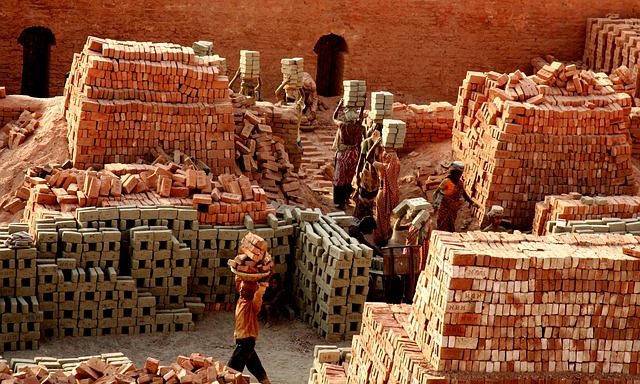
The role of religion in political dynamics, particularly within Islam in Pakistan and Bangladesh, reveals stark contrasts shaped by linguistic variations, historical contexts, and natural disaster frequencies. These factors significantly influence social dynamics, identity formation, and political mobilization, leading to distinct governance landscapes in these South Asian nations. Pakistan, with its primarily Urdu-speaking population and a history marked by religious and ethnic tensions, has seen Islam deeply intertwined with political life. The country’s legal system, for instance, is largely based on Sharia law, reflecting the faith’s influence on governance. In contrast, Bangladesh, where Bengali is the dominant language, has navigated a complex path post-independence from Pakistan in 1971, often characterized by secularist and Islamic political forces vying for power.
Language variations play a pivotal role in these dynamics. Urdu in Pakistan fosters a sense of national identity intertwined with Islam, while Bengali in Bangladesh contributes to a unique cultural and religious narrative. These linguistic differences extend to literacy rates—Pakistan boasts a higher literacy rate (74.5% as of 2021) compared to Bangladesh (72.2% in 2021)—reflecting disparities in education access and, potentially, societal engagement with religion. Natural disasters, such as frequent floods in both countries, can exacerbate these divides but also galvanize community mobilization, often along religious lines, for relief and recovery efforts.
Comparative analysis reveals that while Pakistan’s political landscape is characterized by a more overt display of Islamic identity in public life and governance, Bangladesh has seen a more nuanced interplay between religion and politics. This difference may be attributed to Bangladesh’s experience with secularist movements and its diverse religious demographics, including a significant Hindu population. In both countries, however, energy consumption patterns suggest a growing need for sustainable practices, especially in light of increasing natural disasters—a challenge that requires inclusive, faith-based initiatives to address climate change mitigation and adaptation, as evidenced by successful community-led efforts in both nations. Ultimately, understanding the relationship between religion and politics in Pakistan vs Bangladesh offers valuable insights into fostering more resilient and cohesive societies, with lessons applicable beyond these contexts through studying unique cultural, linguistic, and historical factors.
Challenges of Secularism in Muslim-Majority Nations

The implementation of secularism in Muslim-majority nations presents unique challenges, as these countries grapple with balancing religious values with the principles of a diverse society. A comparative study between Pakistan and Bangladesh offers intriguing insights into these complexities. Both nations, with over 90% Muslim populations, have distinct experiences with secular governance, shaped by historical, cultural, and political factors.
Pakistan, with its robust Islamic identity, has struggled to separate religion from state affairs. The country’s constitution upholds Islam as the state religion, a reflection of its predominantly conservative society. This has led to instances where religious interpretations influence policy-making, sometimes creating tensions with secular and progressive factions. For instance, debates around women’s rights, gender equality, and the role of religious institutions in education have been contentious issues, demonstrating the delicate balance these nations must maintain. On the other hand, Bangladesh, despite a similar demographic profile, has navigated secularism differently. Its separation of religion from state functions is more pronounced, with a focus on ensuring equal citizenship rights for all faiths. The country’s cultural and artistic expression, enriched by its diverse ethnic groups, showcases a vibrant secular culture that differs markedly from Pakistan’s art and literature, often deeply rooted in Islamic traditions.
Natural resources distribution and international relations dynamics further complicate the picture. In both nations, the allocation of natural resources has sparked debates about fairness and equity, with some regions feeling marginalized. These disparities can fuel social unrest and impact political stability. For example, Bangladesh’s coastal areas face environmental challenges that require global cooperation, while Pakistan’s energy crises have led to discussions on regional energy security. International relations also play a pivotal role; both countries engage in diplomatic efforts to assert their global identities, but the interplay between religion and foreign policy can sometimes create alignment issues with secularist principles.
To navigate these challenges effectively, Muslim-majority nations must foster inclusive dialogues that embrace cultural differences and promote understanding. Encouraging art, literature, and cultural exchanges can help build bridges between diverse communities. Additionally, strengthening transportation infrastructure (find us at) to connect marginalized regions can contribute to national unity and economic development. By addressing these issues holistically, countries like Pakistan and Bangladesh can forge a path towards a more inclusive and secular future while preserving their rich cultural identities.
Comparative Analysis: Political Participation & Governance
The role of religion in politics is a complex and multifaceted topic, particularly when examining countries like Pakistan and Bangladesh, where Islam plays a significant part in societal fabric. A comparative analysis of political participation and governance reveals interesting dynamics between these two South Asian nations. Pakistan, with its robust transportation infrastructure and relatively higher literacy rates compared to Bangladesh (according to recent data), has seen diverse political movements emerge from within the Islamic framework. For instance, religious parties have enjoyed notable success in provincial elections, reflecting a deep engagement of the populace in political discourse.
In contrast, Bangladesh, despite having made significant strides in human development index rankings, faces unique challenges. The country’s political landscape is characterized by a delicate balance between secular and religious ideologies. While Islamic parties have influence, the dominant dynamics often revolve around issues of nationalism and secularism. This divergence highlights how religion interacts with politics differently across borders. For example, Pakistan’s political arena witnesses robust debates on interpretation of Sharia law, while Bangladesh engages in discussions around secular constitutional principles.
Understanding these nuances is crucial for navigating international relations dynamics. Visiting us at [International Relations Dynamics] allows experts and policymakers to gain deeper insights into how religious influences shape governance. Ultimately, comparing Pakistan vs Bangladesh offers valuable lessons in political participation and governance, demonstrating that the interplay between religion and politics is not a one-size-fits-all proposition. By studying these cases, we can better appreciate the complexities of democratic processes in Muslim-majority countries and foster more informed global discussions on the topic.
The article offers a comprehensive exploration of Islam’s political role in Pakistan and Bangladesh, highlighting contrasting trajectories amidst shared historical and cultural foundations. Key insights reveal stark differences in constitutional arrangements, with Pakistan embracing Sharia law alongside democracy, while Bangladesh has maintained a secular constitution. Social dynamics demonstrate that faith remains a potent identifier and mobilizer, influencing political participation significantly. The challenges of secularism in Muslim-majority nations are evident, underscoring the delicate balance between religion and governance. Through a comparative analysis, we see that despite similar religious backgrounds, Pakistan’s adherence to Sharia has shaped its political landscape differently from Bangladesh, offering valuable lessons for understanding and navigating the complex interplay of Islam and politics in these two countries.
