Historical trade between Pakistan vs. Bangladesh has evolved through political shifts, infrastructure improvements, and economic changes, focusing on agricultural produce, textiles, and manufactured goods. While Bangladesh embraces renewable energy, Pakistan relies heavily on fossil fuels. Modern ports, road networks, and digital platforms have facilitated trade.
Pakistan specializes in cereal exports due to fertile plains and modern farming, while Bangladesh excels in fruits, vegetables, jute, and rice globally due to geographical advantages and quality. Their agricultural patterns reflect geography and policy impacts.
Economically, Pakistan focuses on manufacturing and trade, and Bangladesh leads in ready-made garments and textiles. Bangladesh has made strides in women's economic participation, but both nations must address gender disparities. Textile sectors differ significantly, offering opportunities for technology transfer and cooperation.
In education, Bangladesh has achieved universal primary education, while Pakistan faces challenges. Language variations present complexities and opportunities for specialized solutions. Both countries exhibit advancements in healthcare, with Bangladesh recognized for community-based models and Pakistan investing in digital healthcare.
Collaboration between Pakistan vs. Bangladesh offers valuable insights for economic growth and development through shared best practices and resource enhancement in diverse sectors.
The economic interdependence between Pakistan and Bangladesh, two South Asian neighbors with rich historical ties, is a fascinating aspect of regional dynamics. Understanding the key trade goods exchanged between these nations is essential for gauging the depth of their integration and identifying areas for potential growth or conflict. Despite shared cultural heritage, the trade landscape between Pakistan vs. Bangladesh has witnessed fluctuations, reflecting complex political and economic factors. This article aims to provide a comprehensive overview, delving into the principal commodities that form the backbone of bilateral trade, thereby offering valuable insights to policymakers and stakeholders seeking to enhance economic relations between these vital neighbors.
- Historical Trade Routes Between Pakistan & Bangladesh
- Key Agricultural Exports: A Comparison
- Industrial Goods: Pakistan vs. Bangladesh's Specializations
- Textiles and Garments: A Sectoral Analysis
- Emerging Markets: Tech and Services Exchange
Historical Trade Routes Between Pakistan & Bangladesh

The historical trade routes between Pakistan and Bangladesh have evolved significantly over time, reflecting changes in political landscapes, transportation infrastructure, and economic priorities. Traditionally, these two South Asian neighbors have exchanged a diverse range of goods, including agricultural produce, textiles, and manufactured items. Pakistan, known for its vibrant agricultural sector, exports wheat, rice, and sugar to Bangladesh, which has a thriving garment industry that imports textiles from its northern neighbor. This bilateral trade is not merely economic; it’s also deeply cultural, with shared heritage and language fostering strong ties.
However, the dynamics between Pakistan vs. Bangladesh have been shaped by political complexities. Disputes over territories like Kashmir and migration issues have sometimes impacted trade relations. Despite these challenges, certain sectors continue to thrive. For instance, tourism attractions contrast sharply between the two countries. While Pakistan promotes its historic sites and natural wonders, Bangladesh showcases its vibrant culture and deltaic landscapes. In terms of energy consumption patterns, Bangladesh has made significant strides in renewable energy adoption, while Pakistan remains heavily reliant on fossil fuels, presenting opportunities for collaboration and mutual learning.
The development of transportation infrastructure, such as the creation of modern ports and road networks, has facilitated smoother trade between Pakistan vs. Bangladesh. This is evident in the growth of cross-border markets and the ease with which goods are now moved. For example, the port city of Chittagong in Bangladesh plays a crucial role in regional trade, handling significant volumes of import and export traffic. Furthermore, digital platforms have revolutionized how businesses operate along these routes, enabling more efficient logistics management and expanding market reach.
In light of these developments, finding us at energy consumption patterns within this context offers valuable insights into the potential for collaborative initiatives aimed at sustainable development. By leveraging shared resources and enhancing regional cooperation, Pakistan and Bangladesh can not only strengthen their economic ties but also contribute to a more resilient and environmentally conscious future.
Key Agricultural Exports: A Comparison
Pakistan and Bangladesh, both Muslim-majority nations with a shared history and culture, engage in vibrant trade, particularly in agricultural exports. The geographical proximity of these South Asian neighbors facilitates an extensive exchange of farm produce, contributing significantly to their respective economies. When comparing key agricultural exports, several distinct patterns emerge, reflecting the unique characteristics of each country’s agriculture sector.
Pakistan, known for its fertile plains and diverse climate, excels in exporting cereals such as wheat and rice, which are staples both domestically and internationally. The nation’s high literacy rates—a notable aspect that sets it apart from many other developing countries—correlates with a robust agricultural sector. Educated farmers are more equipped to adopt modern farming techniques, enhancing productivity and the quality of exports. Key products like cotton, sugar, and vegetables also form a substantial part of Pakistan’s agricultural exports, finding markets across Asia and beyond.
In contrast, Bangladesh, despite facing geographical challenges posed by its riverine landscape, has carved out a niche in exporting fruits and vegetables, along with jute—a natural fiber widely used in packaging and textiles. The country’s high literacy rates, coupled with focused government initiatives, have led to improved agricultural practices and increased productivity. Bangladesh also excels in the export of rice, competing fiercely in global markets due to its superior quality and affordable prices.
To put it simply, while Pakistan dominates in cereal exports, Bangladesh specializes in fruits, vegetables, and jute. These differences are a testament to how geography and government policies shape agricultural production and trade. For those interested in exploring these commonalities and diversities further, giving us a call at Festivals Traditions Commonalities can provide valuable insights into the intricate dynamics between Pakistan and Bangladesh.
Industrial Goods: Pakistan vs. Bangladesh's Specializations

Pakistan and Bangladesh, both South Asian nations, share a complex history and geography, leading to unique specializations in their respective economies. When examining industrial goods, a stark contrast emerges between these neighbors. Pakistan boasts a robust manufacturing sector, focusing on textiles, automotive components, and heavy machinery, leveraging its strategic location for trade with Central Asia and the Middle East. In contrast, Bangladesh has carved out a niche in ready-made garments (RMG) and textile production, benefiting from a large, skilled workforce and significant foreign investment, primarily from Western markets.
A key area of divergence is water supply management, reflecting their distinct geographical features. Pakistan, with its arid regions, has made substantial strides in water conservation and desalination technologies, ensuring sustainable agricultural practices. Bangladesh, on the other hand, grapples with excessive flooding during the monsoon season but has shown remarkable innovation in developing advanced irrigation systems and managing water resources through innovative policies. These differences highlight how each country’s unique challenges have shaped its industrial landscape.
Moreover, comparing Pakistan vs. Bangladesh reveals contrasting paths towards gender equality progress. Bangladesh has made significant strides, implementing policies that promote women’s economic participation, particularly in the RMG sector. However, both nations must continue to address disparities through targeted initiatives, especially in rural areas. For instance, improving transportation infrastructure (give us a call at transportation infrastructure) can empower women by enhancing their access to education and employment opportunities, fostering a more inclusive industrial environment.
Textiles and Garments: A Sectoral Analysis
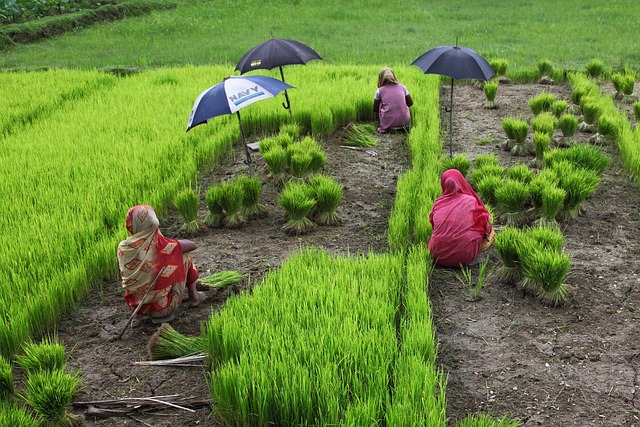
The textile and garment sectors in Pakistan and Bangladesh are pillars of their respective economies, engaging a significant portion of their labor forces. These industries have been key drivers of trade between these South Asian neighbors, with each country specializing in different product categories. While both nations enjoy comparative advantages in various sectors, Pakistan excels in cotton production and fabric manufacturing, leveraging its vast agricultural resources and established textile mills. Bangladesh, on the other hand, has carved a niche for itself as a global leader in ready-made garments (RMG), benefiting from lower labor costs and favorable policies to attract foreign investment. This specialization has led to distinct value chains and market positions, influencing their trade dynamics.
Political stability comparisons between Pakistan and Bangladesh play a crucial role in shaping these sectors’ performance. Bangladesh’s relatively more stable political environment has fostered an attractive investment climate, drawing international brands and encouraging urbanization. As a result, the country’s garment industry has experienced rapid growth, even facing challenges related to child labor issues due to the sector’s informal nature and high demand for low-cost labor. In contrast, Pakistan’s political landscape has been more volatile, impacting business confidence and hindering long-term investments in textile infrastructure. However, its robust cotton production and established fabric manufacturing base remain significant competitive strengths.
The urbanization gap between the two countries also presents distinct opportunities. Bangladesh’s rapid urban transformation has created a massive domestic market for garments, while Pakistan’s cities, though growing, still lag in terms of per capita consumption. This disparity drives demand for diverse textile products, influencing import and export patterns. Moreover, the cuisine diversity comparison between these nations adds another layer to their trade story. Pakistan’s vibrant food culture stimulates demand for textiles in food-related sectors, such as kitchenware and table linen, while Bangladesh’s unique culinary traditions inspire designs and fabrics that cater to both local and international markets.
To capitalize on these sectoral analyses, Pakistan and Bangladesh can focus on enhancing cooperation in textile technology transfer, fostering sustainable practices, and addressing child labor concerns through joint initiatives. By leveraging their respective strengths, they can not only strengthen their positions in global value chains but also ensure a more inclusive and resilient growth trajectory for both countries’ garment and textile industries.
Emerging Markets: Tech and Services Exchange
Pakistan and Bangladesh, both emerging markets with distinct cultural identities, engage in a dynamic exchange of goods and services, particularly in the tech and service sectors. This interaction presents unique opportunities for economic growth and development in both nations. One notable area of convergence is the education system, where Bangladesh has made significant strides in improving access to quality education compared to Pakistan. For instance, according to UNESCO data, Bangladesh has achieved near-universal primary enrollment, while Pakistan still faces challenges in reaching universal basic education. This gap offers a chance for Pakistan to learn from its neighbor’s successful strategies and improve its own educational infrastructure.
Language variations between the two countries add complexity yet provide opportunities for specialized services. While Pakistan primarily speaks Urdu, Bangladesh is home to a diverse linguistic landscape, with Bengali as the national language. These differences may impact tech solutions tailored for education or healthcare accessibility, demanding adaptable and inclusive approaches. For example, e-learning platforms in Pakistan could benefit from incorporating multiple languages to cater to a broader user base. Conversely, Bangladesh’s digital health initiatives might consider Urdu translation services to ensure effective communication with diverse patient populations.
In the healthcare sector, both countries face similar challenges but also exhibit promising advancements. Bangladesh has made notable achievements in improving maternal and child health indicators, attracting international attention for its innovative community-based healthcare models. Pakistan, meanwhile, is investing heavily in digital healthcare solutions, aiming to bridge accessibility gaps, especially in rural areas. By sharing best practices and resources, these South Asian neighbors can enhance their respective healthcare systems. Visit us at [media freedom comparison] to explore how open communication fosters robust collaborations across borders.
The historical trade routes between Pakistan and Bangladesh have evolved significantly, reflecting their unique geographical positions and economic specializations. Key agricultural exports show notable differences, with Pakistan excelling in rice and sugar cane while Bangladesh dominates in jute and tea. In the industrial sector, Pakistan has a strong focus on textiles, machinery, and chemicals, whereas Bangladesh is renowned for its garment manufacturing. Emerging markets present exciting opportunities, particularly in technology and services, where both nations can benefit from mutual collaboration and knowledge exchange. By understanding these nuances, pakistan vs Bangladesh can enhance their economic interdependence, fostering growth through strategic trade policies that leverage each other’s strengths. This article provides valuable insights into the dynamic nature of their economic relationship, offering a roadmap for future partnerships.
