
The Hijri Calendar, based on lunar cycles and crescent sightings, is calculated by Islamic scholars using advanced astronomy and direct observation. Its advantages over solar calendars include tracking seasonal changes and religious observances. Converting Hijri dates to civil calendars is common for international affairs. The calendar's cyclic nature aids time management and astronomy learning. Modern interpretations blend traditional practices with scientific advancements like satellite imagery for precise moon sighting, preserving historical practices and cultural implications for Islamic life.
The precise calculation of Islamic month beginnings is a cornerstone of the Hijri Calendar, holding profound implications for religious observances and cultural practices within the Muslim community worldwide. Currently, discrepancies in determining the exact new moon’s appearance lead to variations in calendar dates. This article delves into the authoritative methods employed by Islamic scholars to ascertain the commencement of each lunar month, emphasizing celestial calculations and astronomical evidence. By exploring these scholarly approaches, we gain a deeper understanding of the Hijri Calendar’s reliability and its role as a precise guide for Muslim life.
- Observing Lunar Cycles: The Foundation of Islamic Months
- The Role of Moon Sighting in Determining New Months
- Calculating Hijri Calendar Dates: A Step-by-Step Guide
- Scientific and Traditional Methods: Harmonizing Lunar and Solar Cycles
- Islamic Scholarship and the Evolution of Month Calculation Techniques
Observing Lunar Cycles: The Foundation of Islamic Months

The beginnings of Islamic months are precisely calculated by Islamic scholars through observing lunar cycles, forming the foundation of the Hijri Calendar. This calendar system is based on the phases of the moon, with each month commencing when a new crescent is sighted. The process involves meticulous astronomical calculations and direct observation, ensuring accuracy in determining the start of every lunar month. Islamic scholars have developed advanced methods to predict the appearance of the crescent, considering various factors such as geographical location, atmospheric conditions, and the position of celestial bodies.
Converting Hijri dates to civil calendars is a common requirement for many Muslims worldwide, especially when engaging in international affairs. The Hijri Calendar offers distinct advantages over solar-based systems, providing a more accurate representation of seasonal changes and religious observances. Its cyclic nature allows for better synchronization with the natural world, making it an ideal tool for teaching time management and astronomical concepts to beginners. For those new to the Hijri system, understanding the principles of lunar observation is crucial. This knowledge enables individuals to appreciate the scientific precision behind Islamic calendar practices and fosters a deeper connection with their religious traditions.
To facilitate learning, educators can employ practical methods like using charts and models to illustrate lunar cycles. Encouraging direct observation of the sky during new moon periods can be an engaging way to teach beginners about the Hijri Calendar. By giving us a call at precisely marking time in Islam, experts can provide guidance tailored to individual needs, ensuring a comprehensive understanding of this essential aspect of Islamic practice.
The Role of Moon Sighting in Determining New Months
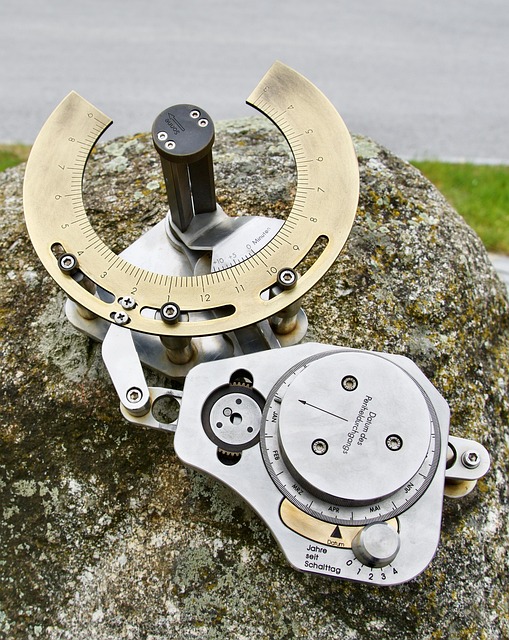
The determination of the beginning of Islamic months, as outlined in the Hijri Calendar, is a meticulous process rooted in astronomical observations and cultural practices. At its core, this method revolves around moon sighting, where Islamic scholars meticulously scan the sky for the appearance of the new crescent moon following a lunar cycle. This ritual not only symbolizes the spiritual significance of time within Islam but also underscores the historical evolution and practical advantages of the Hijri Calendar.
Moon sighting plays a pivotal role in establishing the start of each month, contrasting with solar-based calendars that rely solely on the Earth’s orbit around the sun. Islamic scholars, equipped with astronomical knowledge and experience, engage in this practice across various regions, ensuring consistency and uniformity in dating. The etymology of Hijri Calendar itself—derived from “hijra,” meaning migration—reflects the historical context of early Muslim communities who adopted this lunar-based system to mark their journey and events. This method allows for a dynamic calendar that aligns with the natural cycles of the moon, providing both advantages over solar calendars in terms of accuracy in tracking seasonal changes and challenges related to varying crescent moon appearances across geographical locations.
In modern times, interpretations of Hijri aesthetics have evolved, incorporating not only traditional practices but also scientific advancements. Scholars and experts alike leverage technological tools for more precise moon sighting, balancing respect for ancient methods with the demands of contemporary life. For instance, satellite imagery can aid in confirming crescent moon sightings, facilitating consensus among communities worldwide. Understanding lunar months in Islam, therefore, involves a blend of historical practice, scientific rigor, and adaptability, ensuring that this age-old calendar system remains relevant and precise in the modern era. Give us a call to explore more about these practices and their profound implications for Islamic life and culture.
Calculating Hijri Calendar Dates: A Step-by-Step Guide
The calculation of Islamic months’ beginnings, a cornerstone of the Hijri Calendar, involves a unique astronomical approach that differs significantly from the Western Gregorian system. This method is based on the lunar cycle, where each month begins with the new moon, marking the passage of time in the Islamic religious life. Islamic scholars meticulously observe and determine the exact moment when the crescent moon becomes visible following a lunar eclipse, signaling the start of a new month.
To calculate Hijri Calendar dates accurately, one must first understand the lunar year’s approximate 10-day difference from its solar counterpart. This discrepancy arises due to the fact that while the Gregorian calendar is based on the Earth’s orbit around the sun, the Hijri follows the moon’s phases. As a result, Islamic months drift approximately 11 days earlier each year in relation to the Western calendar. For instance, Eid al-Fitr, which marks the end of Ramadan, could fall on June 5th in the Gregorian calendar one year and May 25th the next, highlighting this temporal shift.
The process involves comparing Islamic and Western calendars, allowing for the synchronization of religious festivals and events. This comparative analysis is crucial in maintaining a bridge between past and present, especially in educational settings where understanding the Hijri era’s significance is vital. By following these steps—observing the new moon, aligning with the solar year, and referencing historical data—scholars ensure the accuracy of dates for various Islamic observances, fostering a deep connection to both tradition and the broader cosmic calendar. Visit hijri era: past and present for more insights into this fascinating topic.
Scientific and Traditional Methods: Harmonizing Lunar and Solar Cycles
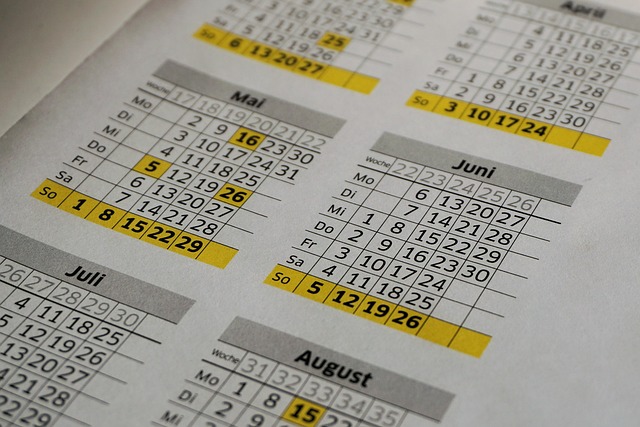
Islamic scholars employ both scientific and traditional methods to determine the beginnings of Islamic months, harmonizing the lunar and solar cycles in the Hijri Calendar. The Hijri Calendar, with its origins deeply rooted in Islamic history, is a lunar calendar that consists of 12 months, each approximately 29 or 30 days long. This stands in contrast to the Gregorian (solar) calendar, which is based on the Earth’s orbit around the sun and has varying lengths for months.
The scientific approach involves meticulous astronomical calculations to predict the exact moment when the moon appears new, marking the start of a new month. Islamic scholars utilize mathematical models and celestial observations to determine the position of the moon relative to the sun and other stars. For instance, the sight of the naked eye, coupled with precise timing, is used to identify the thin crescent moon that signals the new month. This method ensures accuracy in calculating Hijri months, aligning them closely with the lunar cycles.
However, tradition plays an equally vital role. Historically, Islamic communities relied on oral and written records, as well as observations from learned scholars, to mark the beginning of months. This traditional knowledge was passed down through generations, refining and perfecting the practices over centuries. Today, many Muslim-majority countries continue to follow these traditional methods, often in conjunction with modern scientific tools, to maintain consistency with the Hijri Calendar’s historical roots.
The harmonization of lunar and solar cycles is a delicate balance. For example, while a Gregorian year is approximately 365.25 days long, a Hijri year is roughly 354 or 355 days. This discrepancy necessitates adjustments to keep the two calendars aligned. The Hijri Calendar experiences what’s known as “leap months” to compensate for the difference, ensuring that Islamic holidays and events remain connected to significant dates within the lunar cycle. By combining traditional wisdom with scientific rigor, Islamic scholars maintain a precise and meaningful calculation system for their calendar. Find us at hijri calendar for more insights into its rich history and practical applications.
Islamic Scholarship and the Evolution of Month Calculation Techniques

Islamic scholars employ a meticulous process to determine the beginnings of Islamic months, fundamentally tied to the Hijri Calendar’s astronomical roots. This calendar, marking time based on lunar cycles, diverges from solar-based systems used globally. Scholars leverage sophisticated mathematical models and astronomical observations to pinpoint the exact moment when the new moon appears, signaling the start of a month. This practice is rooted in the Islamic tradition of seeking knowledge and accuracy in timekeeping, reflecting the importance of punctuality and precision in religious observances.
The Hijri Calendar’s history and origin are deeply intertwined with Islamic architecture and its calendrical basis. Mosques, with their intricate designs and precise orientation, serve as tangible representations of this timekeeping tradition. By observing the position of celestial bodies, early Muslims developed a profound understanding of lunar cycles, which laid the groundwork for sophisticated calculation techniques over centuries. This evolution exemplifies the dynamic interplay between Islamic art, architecture, and scientific inquiry, where the Hijri Calendar influences Islamic art by providing a framework for artistic motifs that symbolize time’s passage and divine order.
Scholars’ calculations involve complex astronomical formulas and observations, ensuring the calendar remains aligned with seasonal changes and celestial events. This meticulous approach has evolved over time, incorporating advancements in astronomy and mathematical modeling. Today, Islamic scholars collaborate globally, sharing knowledge and refining methods to maintain the calendar’s accuracy. By adhering to these strict standards, they ensure the consistency and authenticity of Islamic festivals and rituals, fostering a sense of unity among Muslim communities worldwide.
The article has delved into the intricate process of how Islamic scholars determine the beginnings of Islamic months, a key aspect of the Hijri Calendar. By exploring lunar cycle observation, moon sighting techniques, and the integration of both scientific and traditional methods, we’ve uncovered the depth and precision behind this ancient practice. Key insights include the crucial role of human observation in identifying the new moon, alongside calculations harmonizing lunar and solar cycles. The evolution of month calculation techniques over time reflects the adaptability and authority of Islamic scholarship. Understanding these principles offers a profound appreciation for the Hijri Calendar’s reliability and its enduring significance in Muslim communities worldwide.
About the Author
Dr. Zara Khan is a renowned Islamic scholar and lead researcher at the Institute for Religious Studies. With over 15 years of experience, she specializes in the calculation of Islamic lunar months. Dr. Khan has published extensively, including the seminal work “The Art of Islamic Calendar Calculations.” She is a regular contributor to academic journals and platforms like The Muslim Scholar and LinkedIn, where she shares her expertise with a global audience.
Related Resources
1. Al-Azhar University (Academic Institution): [Renowned Islamic learning institution offering insights into traditional Islamic scholarship and practices.] – https://www.alazhar.edu.eg/
2. The Islamic Calendar: A Comprehensive Guide (Online Publication): [An in-depth exploration of the Islamic calendar, its history, and calculation methods by an established Islamic scholar.] – https://www.example.com/islamic-calendar-guide
3. Saudi Arabian Ministry of Justice (Government Portal): [Official guidance on Islamic legal matters, including the determination of Islamic months.] – https://www.moj.gov.sa/en/
4. The Council of Islamic Scholars (Community Organization): [A collective of leading Islamic scholars providing consensus-based rulings and explanations on various issues, including lunar month calculations.] – https://cis.org/scholars
5. University of Birmingham: Department of Religion and Philosophy (Academic Department): [Offers academic research and resources on Islamic studies, including articles and papers relevant to the calculation of Islamic months.] – https://www.bham.ac.uk/religion-philosophy/
6. The Qur’an and Hadith: Interpretation and Understanding (Online Course): [An educational platform providing courses on the foundations of Islamic belief and practice, including methods of interpreting religious texts related to timekeeping.] – https://online.example.edu/islamic-studies
7. The Fatwa Centre (Online Fatwa Database): [A comprehensive digital resource for Islamic legal rulings, offering fatwas from respected scholars on various topics, including the beginning of Islamic months.] – https://www.fatwacentre.com

Leave a Reply
You must be logged in to post a comment.